Authors: Eugene Nacu, Jana Bertram, Alex Salnikov
Abstract
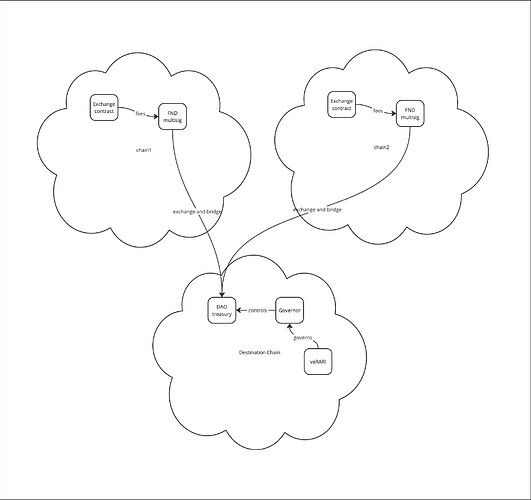
This proposal responds to RRC 39, where the RARI DAO requested the RARI Foundation to manage secondary fee collection manually while the DAO implements multichain on-chain governance. This document outlines the mechanics of the proposed fee collection system and its implementation steps.
Rationale
The DAO requires an interim solution to ensure secondary fees are collected efficiently across multiple ecosystems. Since fees are already established on Ethereum, implementing a structured collection mechanism will provide stability and transparency while the DAO finalizes a long-term governance framework.
Motivation
By implementing this solution, the DAO ensures that fees are properly aggregated and transferred to the treasury, maintaining financial accountability. This also establishes a clear and operational process across multiple chains, mitigating inefficiencies and delays.
Specifications
The RARI Foundation will manage a multisig wallet in the following ecosystems to collect secondary fees:
ETHEREUM
POLYGON
MANTLE
ARBITRUM
CHILIZ
LIGHTLINK
ZKSYNC
ASTARZKEVM
BASE
RARI
CELO
FIEF
XAI
KROMA
ZKLINK
OASYS
QUAI
SAAKURU
OASIS
PALM
MATCH
FIVIRE
SEI
CAMP
LISK
MOONBEAM
ETHERLINK
ZKCANDY
ALEPHZERO
BERACHAIN
ABSTRACT
SHAPE
TELOS
HEDERAEVM
If additional chains are added to the Rarible Protocol in the future, RARI Foundation shall collect fees on behalf of the DAO here as well.
Fee Collection Process
- For secondary sales paid in ETH: Fees will be bridged to the DAO treasury in ETH.
- For secondary sales paid in other tokens: Fees will be swapped for USDC before bridging to the DAO treasury.
- Bridging to the DAO’s treasury will be conducted at a minimum of monthly, at a maximum of quarterly, depending on the volume of the fees collected.
- Foundation will record levels of collected fees as part of quarterly transparency reports.
A diagram outlining the collection mechanism is attached to this proposal.
Steps to Implement
- DAO Approval: The DAO votes to approve the proposed fee collection mechanism.
- Multisig Deployment: The RARI Foundation deploys multisig wallets on each of the listed chains.
- Contract Adoption: Rarible adopts the fee collection contracts.
Timeline
- Week 1-2: DAO discussion and approval process.
- Week 3-4: Deployment of multisig wallets across ecosystems.
- Week 5+: Integration with Rarible and initiation of fee collection.
Costs
- Administrative oversight required for set up and execution as well as operational costs for ongoing maintenance, will be absorbed by the Foundation’s operational budget
- Transaction costs associated with bridging and swaps
This system is ready for immediate implementation pending DAO approval.